
Finding the Light, Architecture & Energy of NYC
There is something about New York City that feels different the moment you arrive.
The energy is bold. Confident. Assertive. Strong. There is a sense of movement everywhere you look, from the people moving quickly down the sidewalk to the architecture rising above you. The city doesn’t ask for your attention. It commands it.
So when I had the opportunity to photograph this editorial at Top of the Rock, I knew I wanted to do more than simply photograph beautiful people with an incredible view behind them.
I wanted to photograph the feeling of New York.
As a photographer, I have always been drawn to architecture, leading lines, light and the way a space can completely change the feeling of an image. When I walk into a new environment, I’m constantly looking for the elements that can help tell the story: the way light falls across a wall, a reflection in glass, a shadow cutting across the frame, the geometry of a building, the movement of a dress or the way a person naturally interacts with their surroundings.
Top of the Rock gives you all of that in one place.
And for me, that is what makes it such a compelling setting for wedding and editorial photography.

Why Top of the Rock Is So Compelling for Wedding Photography
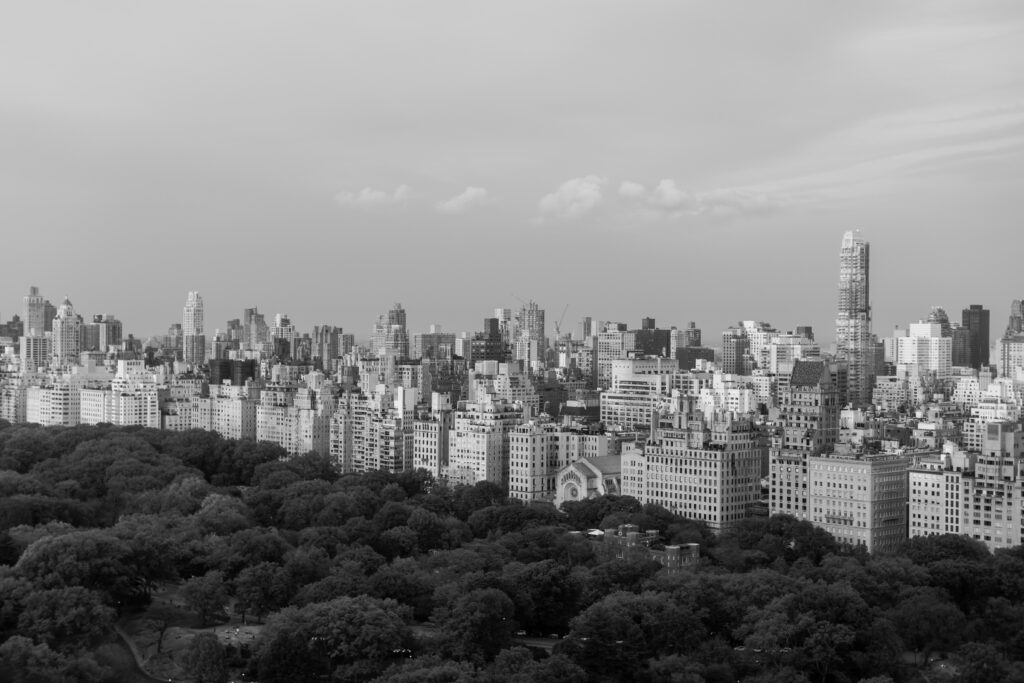
Top of the Rock sits 70 floors above Rockefeller Center and offers three levels of indoor and outdoor observation decks with expansive views across New York City. From the upper levels, the city becomes more than a backdrop. It becomes part of the composition.
That distinction is important.
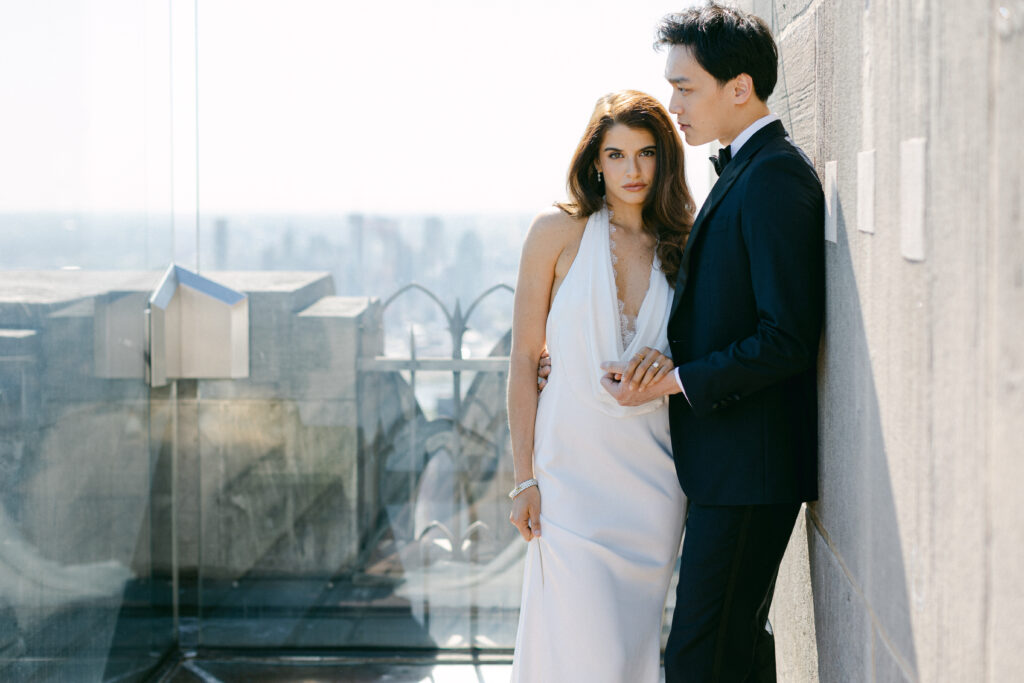
When I’m photographing somewhere as visually iconic as New York, I don’t want to simply place my subjects in front of the skyline and press the shutter. The skyline is already spectacular. My job is to find a way to make the couple, the architecture and the atmosphere feel like they belong together in the same frame.
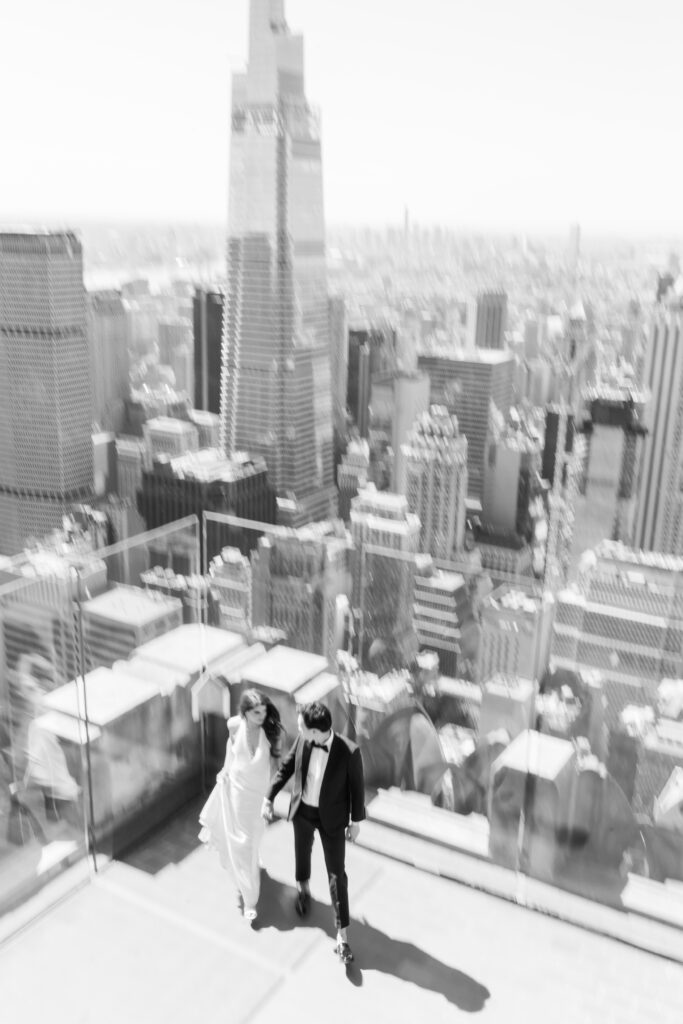
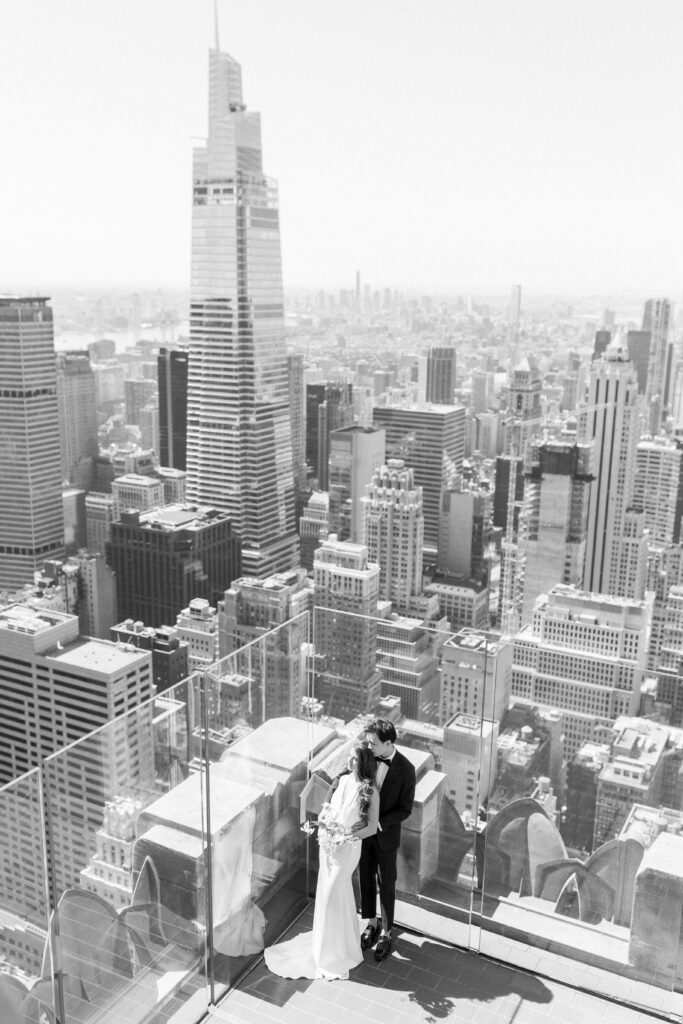
Sometimes that means pulling back and allowing the scale of the city to take over.
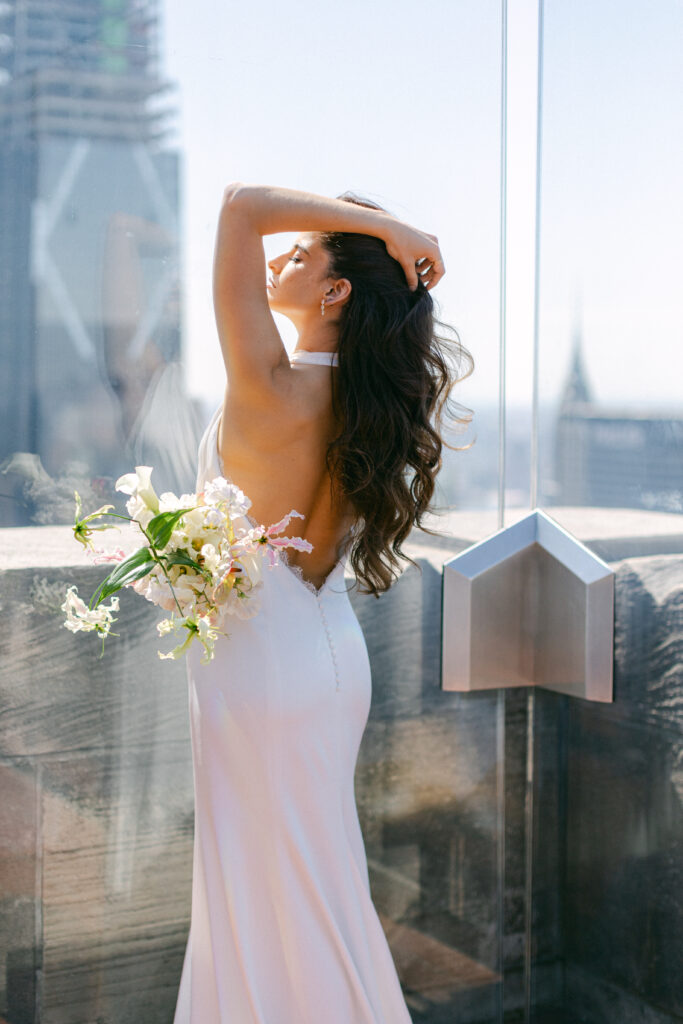
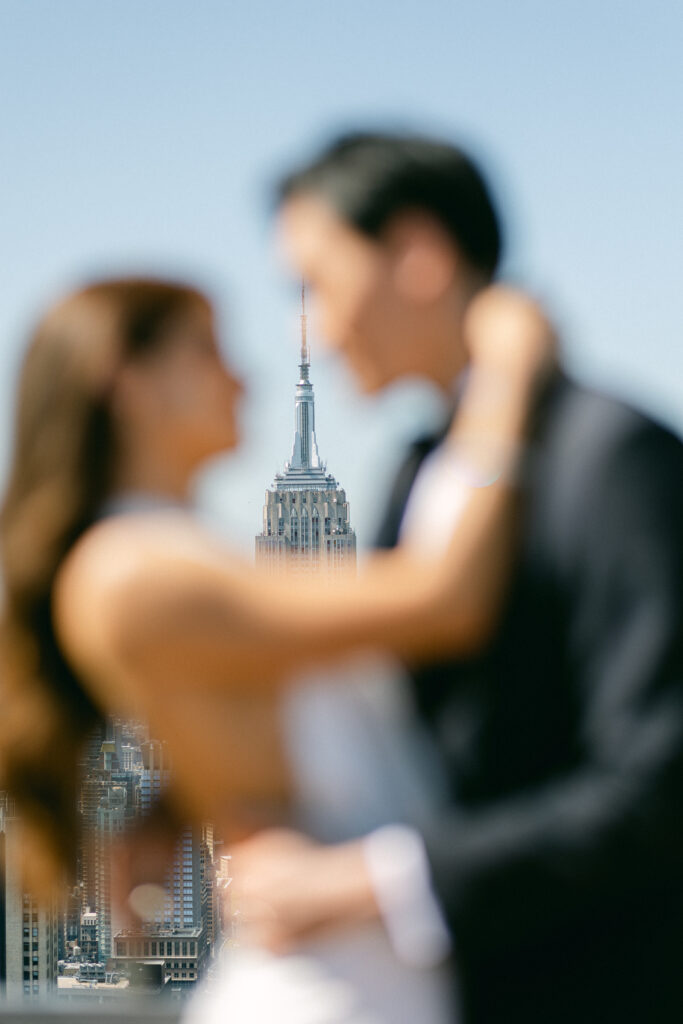
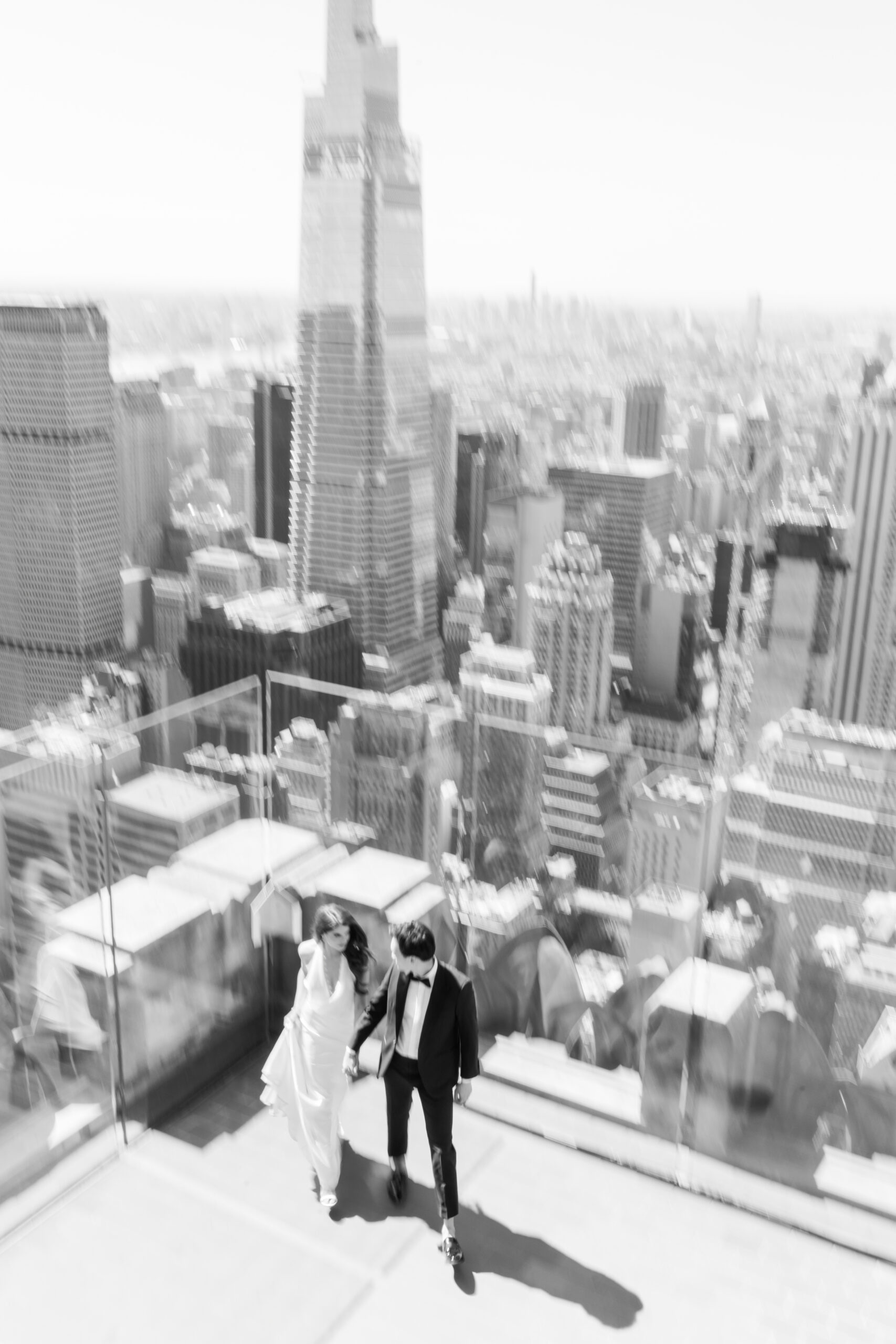
Sometimes it means getting much closer and letting the architecture become an abstract shape behind my subject.
And sometimes the most interesting photograph isn’t the obvious one at all.
That’s where my approach to editorial wedding photography comes in.
Editorial Wedding Photography Is About More Than Beautiful Poses
For me, editorial wedding photography isn’t about making a wedding look like a fashion magazine simply for the sake of looking fashionable.
It’s about being intentional.
It’s about considering every element inside the frame and asking how it contributes to the image.
Where is the light?
What is happening in the background?
Is there a leading line that can draw the eye toward the couple?
Can I use symmetry or negative space to create something more graphic?
Would the photograph feel stronger if I stepped back?
What happens if I change my perspective?
Is there movement I can introduce rather than asking someone to hold a pose?
Those decisions happen constantly while I’m photographing.
The result can feel polished and elevated, but I never want the photograph to feel overly constructed. I’m always looking for the balance between intention and authenticity.
That is the part of editorial photography that I love most: creating an image that feels artful without losing the person inside it.
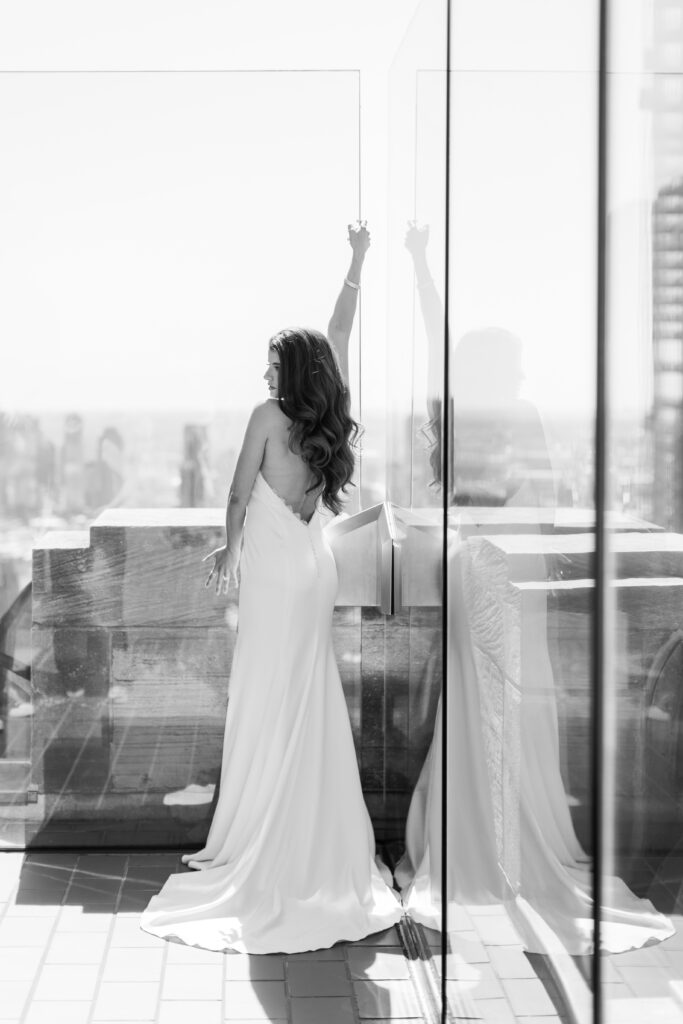
Editorial Wedding Photography Is About More Than Beautiful Poses
For me, editorial wedding photography isn’t about making a wedding look like a fashion magazine simply for the sake of looking fashionable.
It’s about being intentional.
It’s about considering every element inside the frame and asking how it contributes to the image.
Where is the light?
What is happening in the background?
Is there a leading line that can draw the eye toward the couple?
Can I use symmetry or negative space to create something more graphic?
Would the photograph feel stronger if I stepped back?
What happens if I change my perspective?
Is there movement I can introduce rather than asking someone to hold a pose?
Those decisions happen constantly while I’m photographing.
The result can feel polished and elevated, but I never want the photograph to feel overly constructed. I’m always looking for the balance between intention and authenticity.
That is the part of editorial photography that I love most: creating an image that feels artful without losing the person inside it.
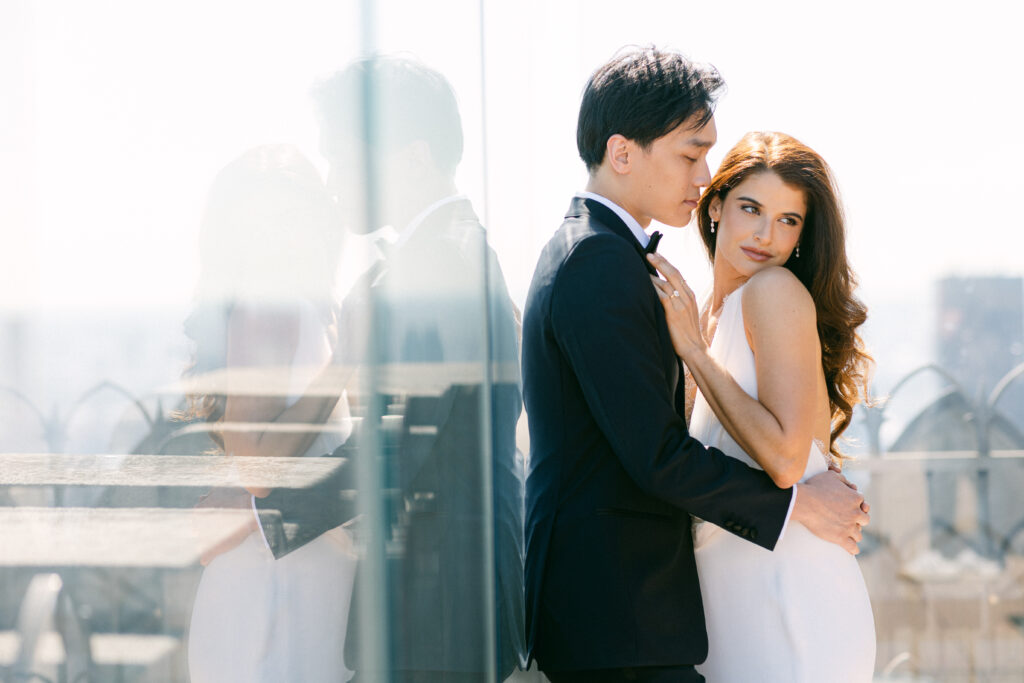
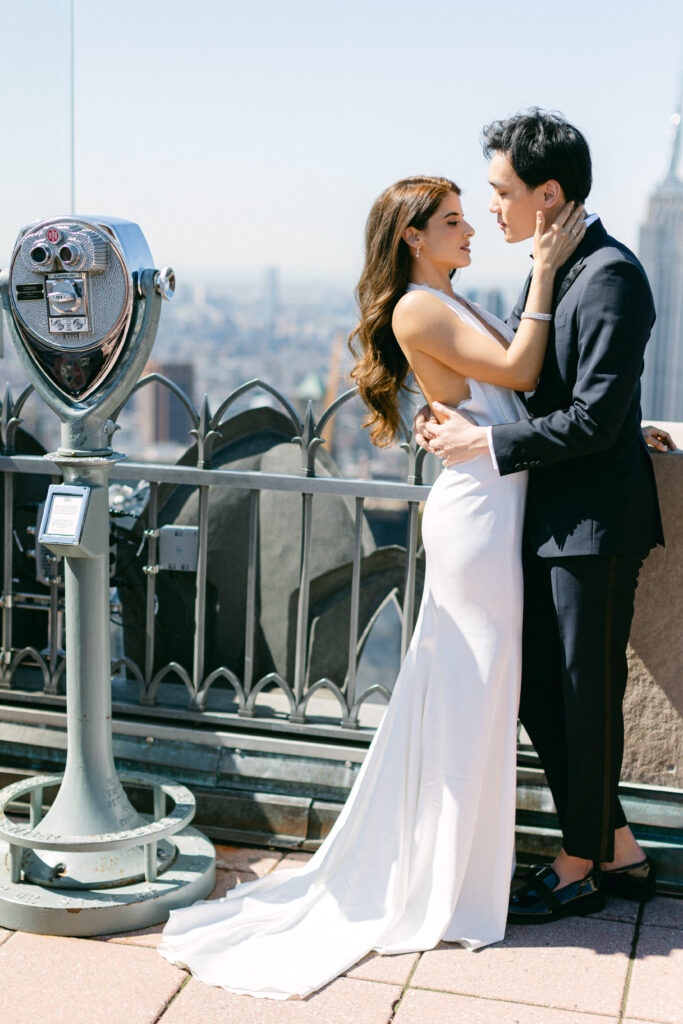
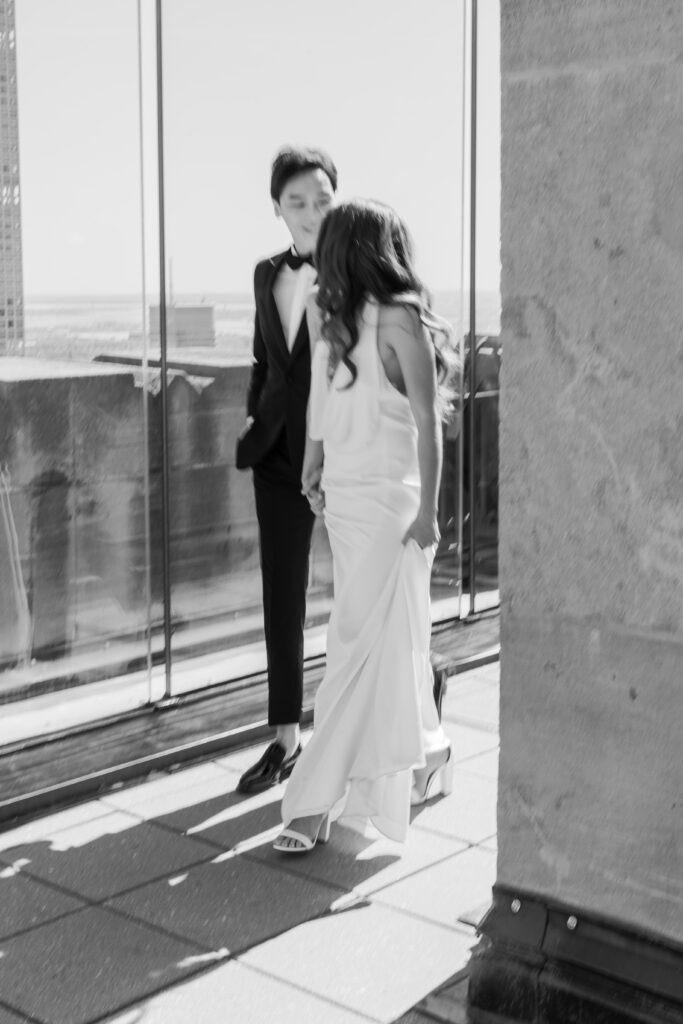
Finding the Architecture
Architecture has always been one of the things that draws me into a photograph.
I love the structure of a space. Repeating lines. Curves. Windows. Symmetry. Angles. Texture. The way a building can create a frame within a frame.
Top of the Rock is especially inspiring from that perspective because you’re surrounded by the visual language of New York. Rockefeller Center itself is an architectural landmark, while the observation decks open up to an entirely different kind of composition: skyscrapers, rooftops, streets, windows and the seemingly endless geometry of Manhattan.
Rather than treating those elements as background scenery, I look for ways to use them strategically.
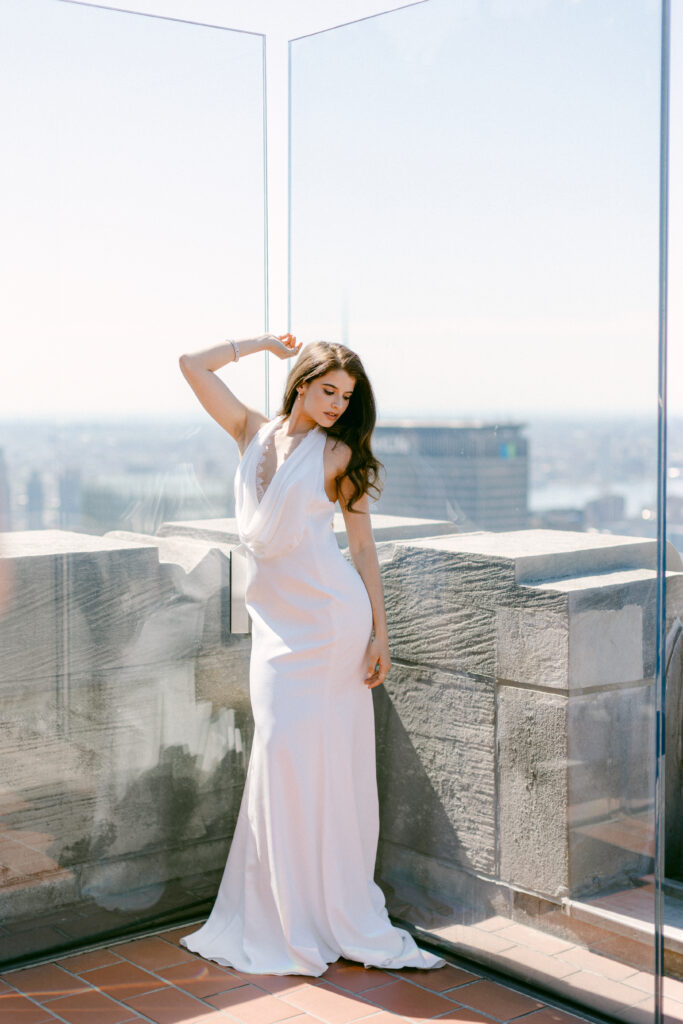
A railing can become a leading line.
A row of windows can create repetition.
The edge of a building can divide the frame.
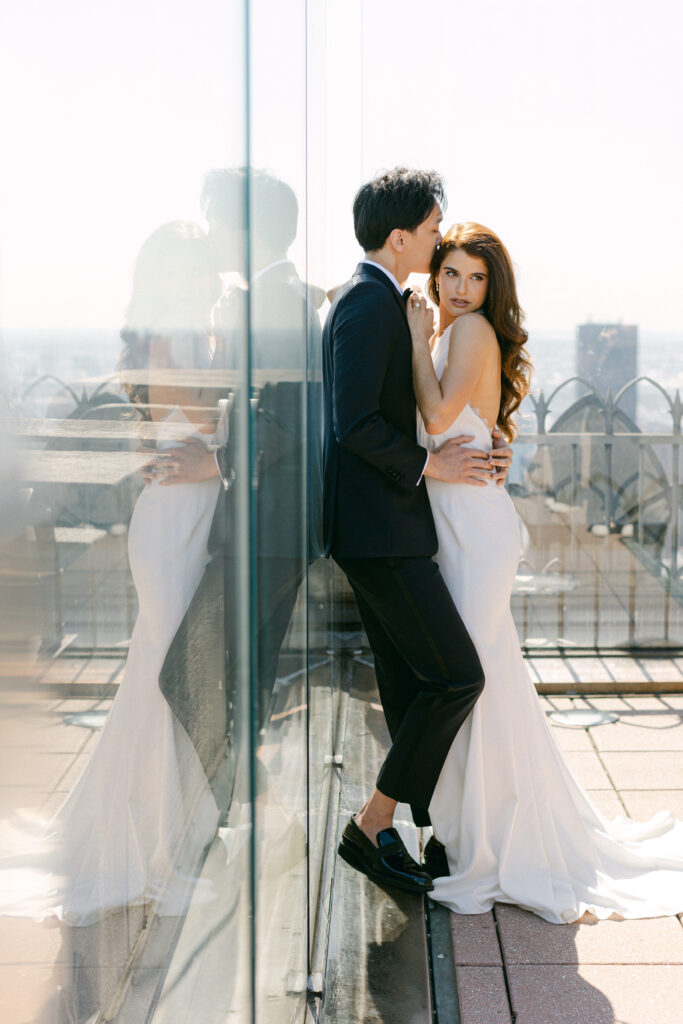
A reflection can create an entirely second layer to the photograph.
Negative space can make a couple feel small within the scale of the city.
And sometimes a simple shift in my position can completely transform the composition.
That’s one of the reasons I love photographing in cities. There are so many visual elements already there. You just have to slow down enough to see them.
Looking for the Light
Before I photograph almost anything, I’m looking for the light.
Not just where the light is brightest, but where it is most interesting.
At Top of the Rock, light interacts with the city in so many different ways. It reflects off glass and steel. It creates shadows across architecture. It changes the color and atmosphere of the skyline as the day moves toward evening.
I’m always watching for those transitions.
A pocket of directional light.
A reflection that adds depth.
A shadow that creates contrast.
The glow of the city as daylight begins to disappear.
The subtle shift that happens when the skyline starts to illuminate against a darker sky.
Those moments can completely change an image.
And I don’t necessarily need perfect light everywhere. Sometimes the most beautiful photograph comes from the contrast between light and shadow, or from allowing part of the frame to fall away into darkness.
For me, finding beautiful light is less about following a formula and more about paying attention.
Letting Movement Bring the Image to Life
One of my favorite ways to keep an editorial image from feeling overly posed is to introduce movement.
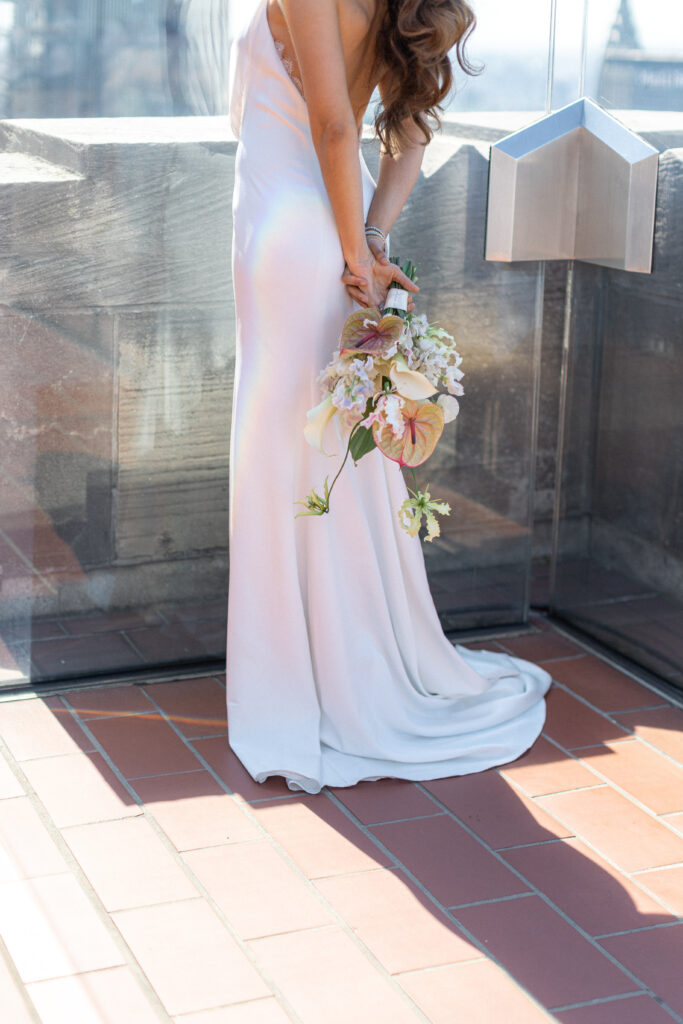
A veil catching the wind.
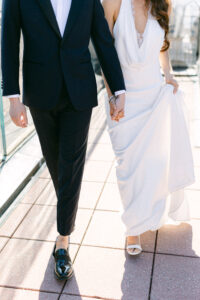
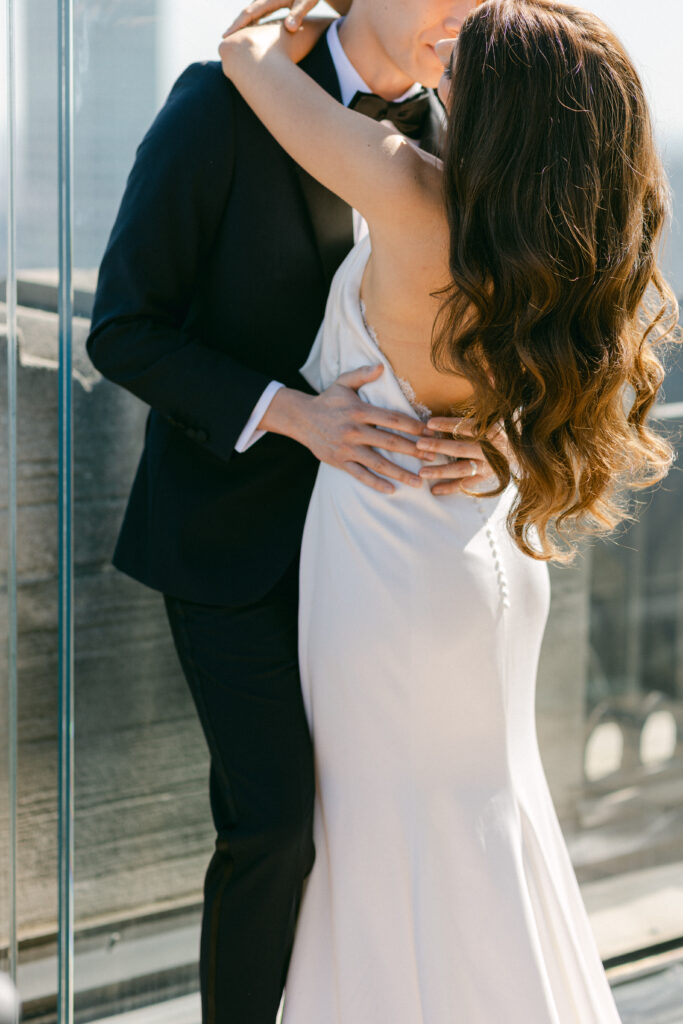
A dress moving as someone walks.
Hair shifting in a breeze.
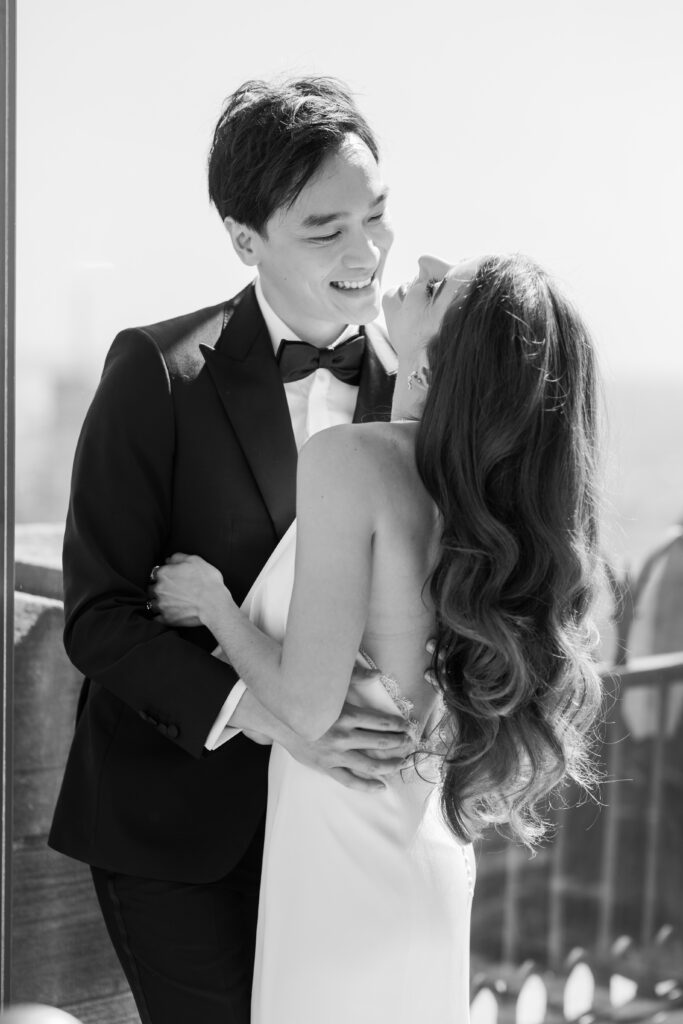
A couple turning toward one another.
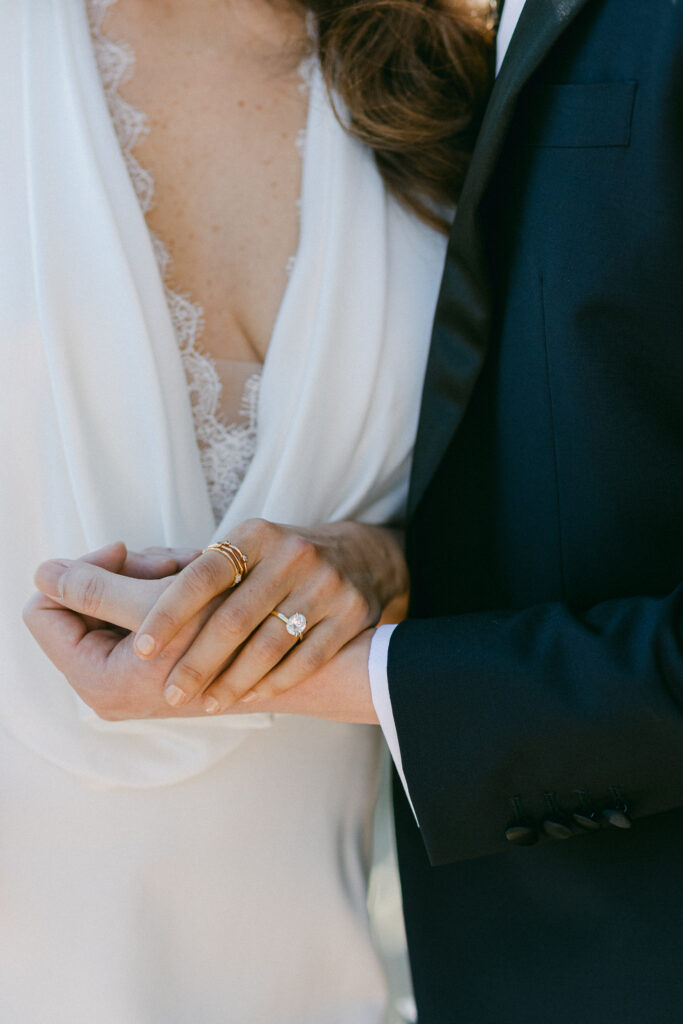
A hand reaching for the other person.
Someone taking a few steps rather than standing still.
Movement creates energy, and energy felt especially important in New York.
The city itself is constantly moving. I wanted the images from this shoot to reflect that rather than feeling frozen in place.
This is also where I think editorial and documentary instincts can work beautifully together. I can create the conditions for an image, but I still want to leave room for something real to happen inside it.
The best photographs often happen in that space between direction and spontaneity.
Looking for the Unexpected Perspective
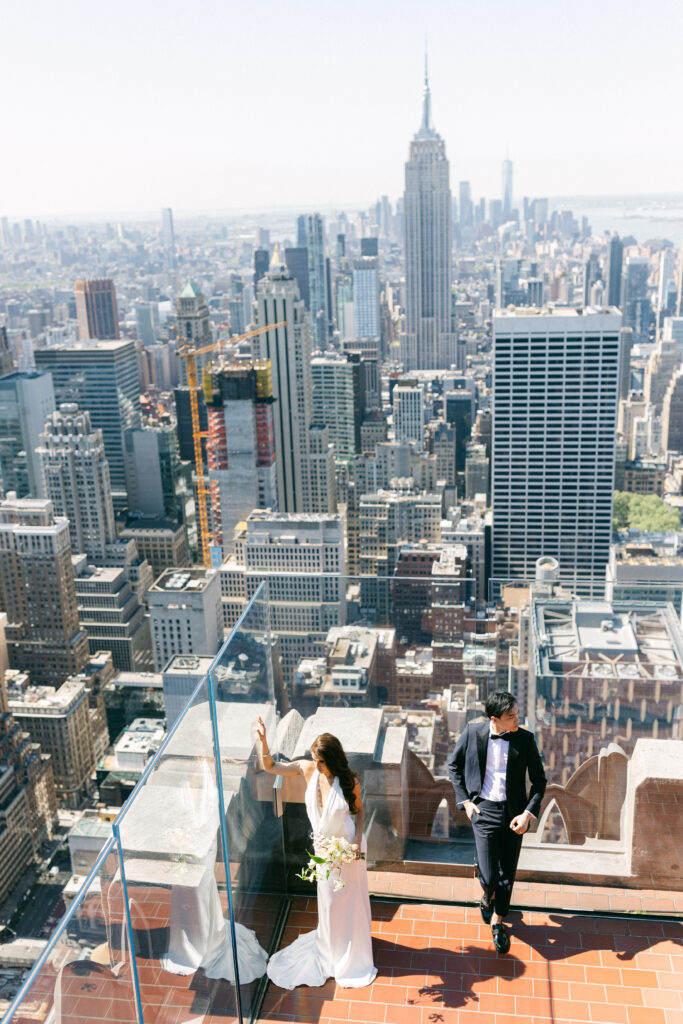
When you’re photographing somewhere as recognizable as Top of the Rock, there is an obvious photograph everyone expects to see.
The skyline.
The Empire State Building.
The city stretching endlessly into the distance.
Those photographs are beautiful, and of course I want to make them.
But I’m also interested in everything around the obvious photograph.
What happens if I photograph through a reflection?
What if I move lower?
What if I use the architecture to partially obscure the skyline?
What if the couple becomes a small figure within a much larger frame?
What if I turn around completely?
I’m constantly looking for those unexpected perspectives because they are often what make an image feel personal rather than interchangeable.
You can photograph the same location hundreds of times and still create something completely different depending on where you stand, what you’re seeing and what you choose to emphasize.


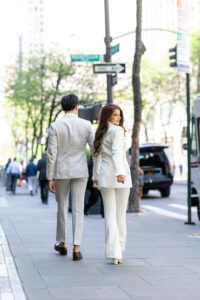
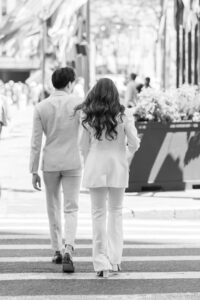
Photographing the Energy of New York City
This may be the hardest part of the experience to explain because it isn’t something you can really measure.
You feel it.
New York has a confidence to it. There is boldness in the architecture, movement in the streets and a certain strength in the people who move through it.
I wanted that feeling to make its way into these photographs.
Not just through the skyline, but through the way the images feel.
The fashion.
The movement.
The architecture.
The contrast.
The scale.
The moments of stillness against all of that energy.
For me, that is what makes a photograph more than a pretty picture. It should transport you somewhere. You should be able to look at it years later and remember not just what you saw, but what the place felt like.
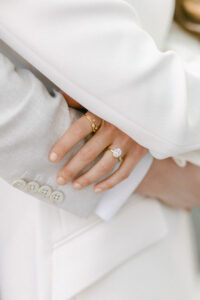
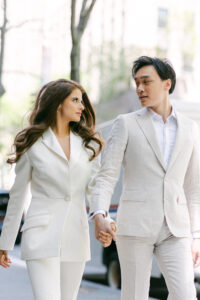
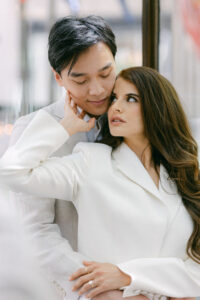
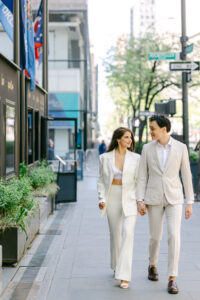
What Makes Editorial Wedding Photography Feel Timeless?
Editorial photography can sometimes be associated with whatever happens to be fashionable at the moment.
That’s not what I’m interested in.
Trends come and go. What I want to create are photographs that still feel beautiful years from now.
For me, timeless editorial wedding photography comes from a combination of intentional composition, beautiful light, thoughtful styling and genuine connection.
The fashion can be elevated.
The setting can be extraordinary.
The composition can be carefully considered.
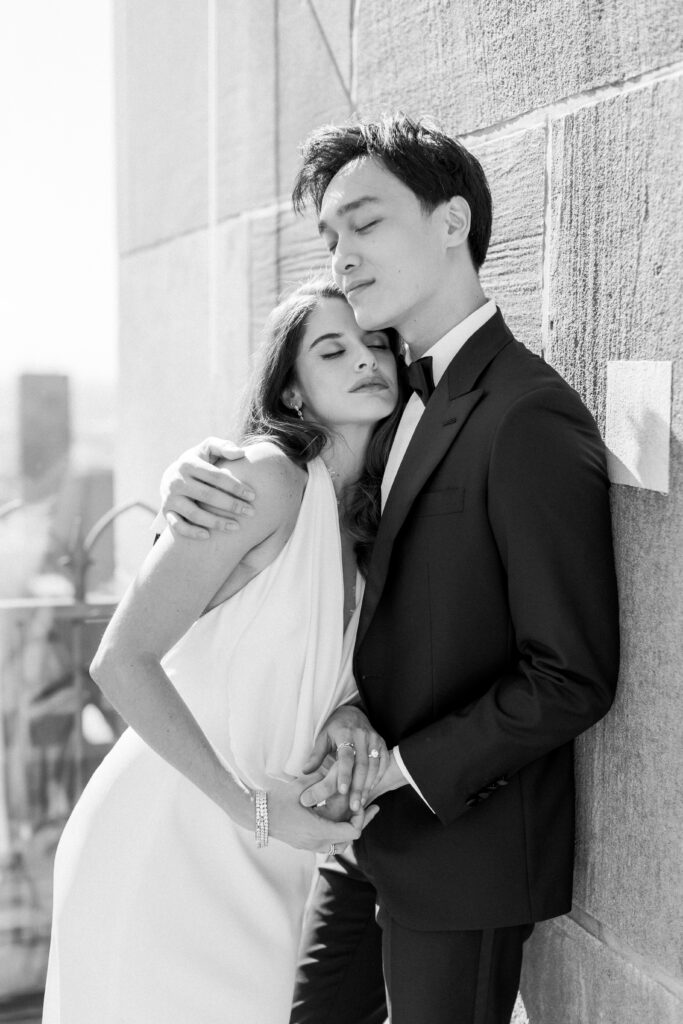
But there still needs to be something human in the image.
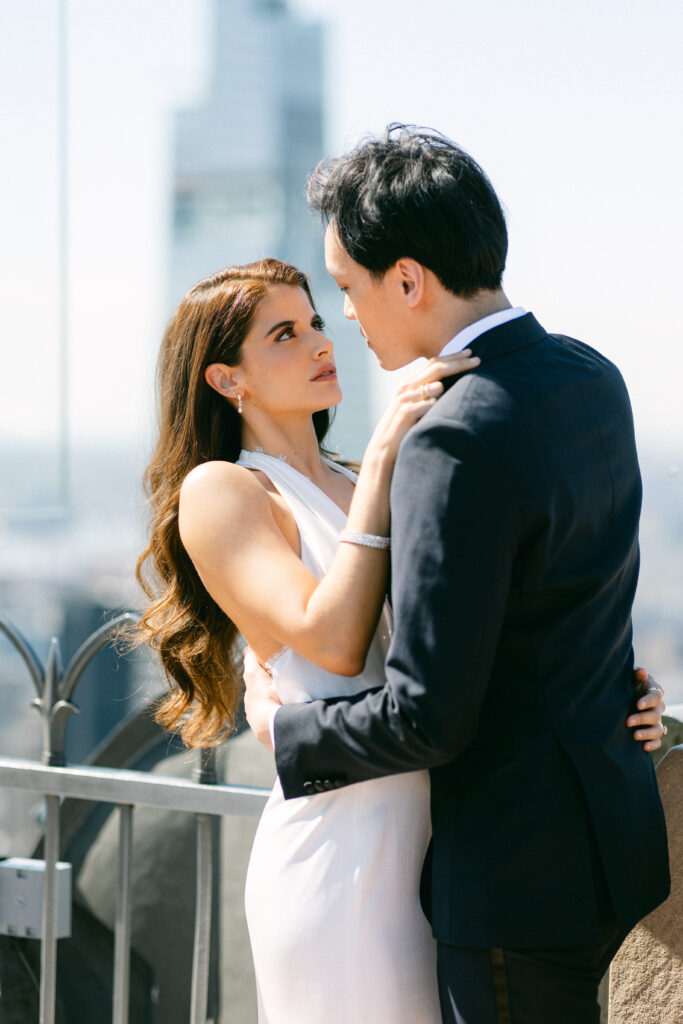
A glance.
A touch.
A little movement.
A sense of anticipation.
A moment where the couple forgets I’m there.
Those are the details that keep an image from feeling like a photograph of clothing or architecture and turn it into a photograph of two people.
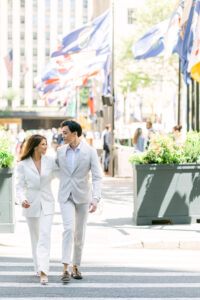
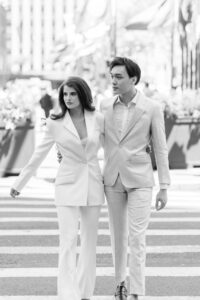
Why I Love Photographing Places With a Strong Sense of Place
One of my favorite things about photography is that the setting can become part of the story.
A wedding doesn’t have to look the same from one city to another, and I don’t want it to.
The location should influence the way the photographs feel.
At Top of the Rock, the city is impossible to ignore. It gives you scale, texture, architecture, movement and an energy that is uniquely New York.
And that creates an opportunity to make photographs that couldn’t have been made anywhere else.
That’s ultimately what I’m looking for whenever I photograph a new place: the elements that make it unmistakably itself.
The light.
The architecture.
The landscape.
The movement.
The atmosphere.
The details that someone might overlook if they’re simply looking for a beautiful backdrop.
Those are the things I want to photograph.
I approach every wedding location with that same curiosity, looking for the details that make a place feel unmistakably itself. You can see that same approach in this Hotel Bel-Air wedding, where the architecture, gardens, light and sense of place became an integral part of the story.
A Top of the Rock Wedding Through My Lens
This editorial at Top of the Rock was honestly a dream come true.
Not simply because of the location, although standing above Manhattan with the city stretching out in every direction is pretty incredible.
It was a dream because it gave me the opportunity to photograph in a way that feels deeply connected to how I see.
To slow down and look for the light.
To use architecture intentionally.
To find reflections and shadows.
To experiment with perspective.
To let movement create energy.
To step back and allow the city to become part of the story.
And then, in the middle of all of that, to photograph connection.
That’s what editorial wedding photography means to me.
It’s not about creating something that looks perfect.
It’s about creating something that feels intentional, elevated and alive.
And sometimes, the most magical photographs happen when you simply pay attention to what is already there.
Although I photograph weddings throughout Southern California as a Los Angeles wedding photographer, opportunities to photograph in cities like New York always remind me how much the environment can shape the visual story of a wedding day.
Creative Partners:
Host: @makeprettyworkshop @mollymccauley_photo
Venue: @topoftherocknyc
Beauty: @willowhouse.beauty
Florals: @bloombloom.studio
Wardrobe Styling: @agency8bridalstylist
Wedding Gown: @rimearodaky
Suiting/Tux: @thegroomshopnyc
Additional Wardrobe: @ronnykobo
Bridal Suit/Accessories: @silkthreadsocial
Jewelry: @verstolo
Video: @loyerfilms
BTS Photo: @tiffanyjphotography
Frequently Asked Questions About Top of the Rock Wedding Photography
Can you have a wedding at Top of the Rock?
Top of the Rock is an observation deck rather than a private wedding venue, so couples should confirm current event and wedding options directly with Rockefeller Center and its designated wedding partners. The observation deck itself does not offer private event space.
Is Top of the Rock good for wedding photos?
Absolutely. The combination of Manhattan’s skyline, architectural elements, open-air spaces, reflections, changing light and multiple perspectives makes Top of the Rock an especially compelling location for wedding and editorial photography.
What makes Top of the Rock different from other NYC photography locations?
One of its greatest strengths is the ability to photograph the city from above while still incorporating recognizable architectural elements into the frame. The observation deck provides expansive views in multiple directions, including the Empire State Building and Central Park.
What is editorial wedding photography?
Editorial wedding photography is an intentional approach to photographing a wedding that combines thoughtful composition, beautiful light, fashion, architecture and creative direction with genuine emotion and connection. The goal isn’t simply to create posed photographs. It’s to create images that feel visually considered while still feeling like the people in them.
What should I look for in a Top of the Rock wedding photographer?
Look for a photographer whose portfolio demonstrates more than beautiful portraits. Pay attention to how they use architecture, light, movement, perspective and the environment. A photographer who understands how to compose within a complex cityscape can create images that feel connected to the location rather than simply placing you in front of it.
What is the best time for Top of the Rock wedding photos?
The best time depends on the look you’re hoping to create. Daylight can emphasize architecture, detail and clarity, while the transition toward sunset can bring a more atmospheric quality as the city begins to glow. Top of the Rock currently operates throughout the day and into the evening, giving photographers different opportunities to work with the changing character of the city.
meet tiffany

For over a decade, Tiffany has documented weddings and milestones with an approach rooted in trust, presence, and intentional storytelling. Her imagery blends authentic emotion with an editorial perspective, creating heirloom photographs that feel honest, immersive, and alive.

from the archives
popular entries
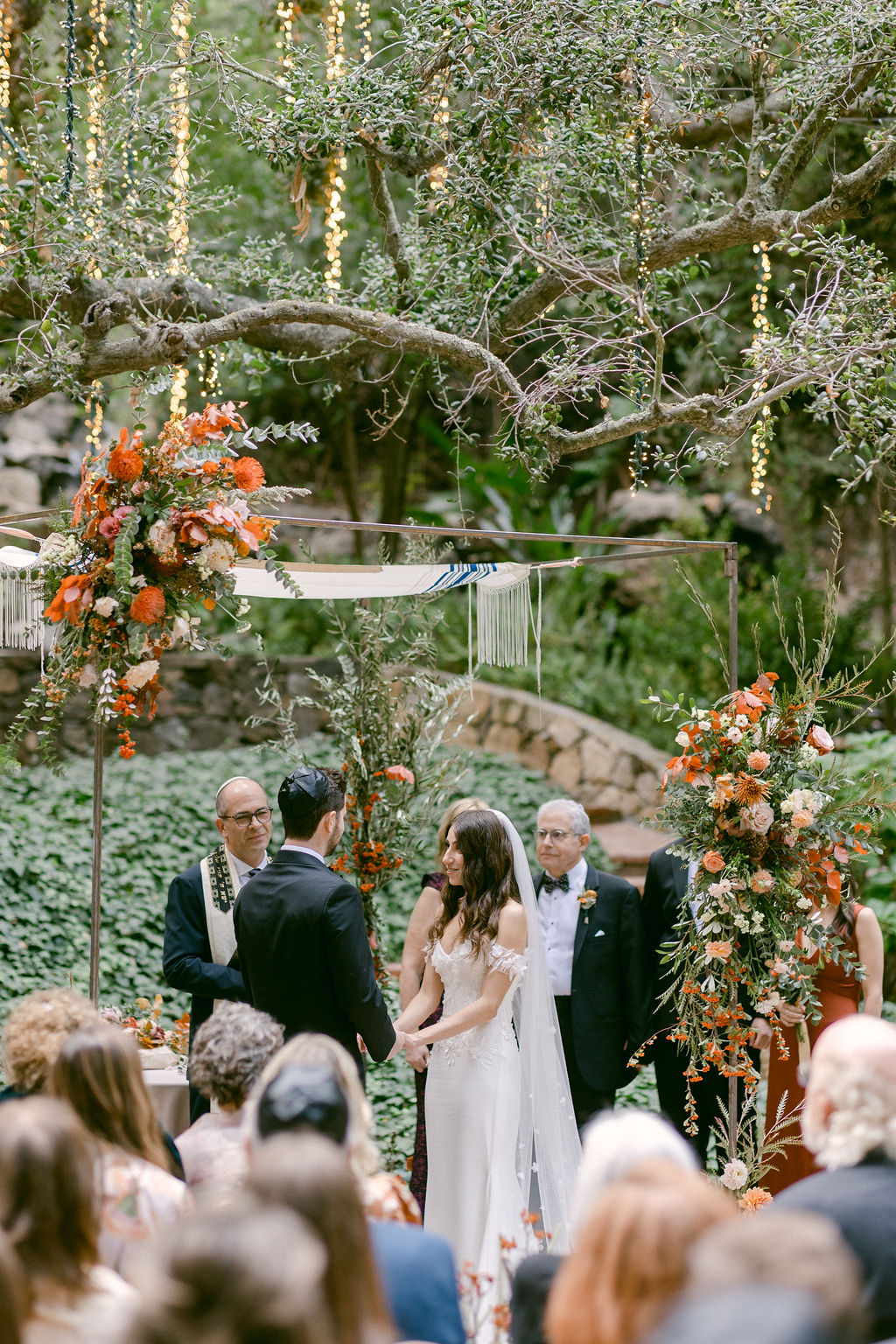
Rebecca & Aaron’s Fall Wedding There is something especially beautiful about a Calamigos Ranch wedding in the fall. Set in the hills of Malibu, the property has a feeling that is difficult to replicate: romantic and naturally beautiful, but still refined enough to feel elevated and intentional. For Rebecca and Aaron, that balance was exactly […]
Finding the Light, Architecture & Energy of NYC There is something about New York City that feels different the moment you arrive. The energy is bold. Confident. Assertive. Strong. There is a sense of movement everywhere you look, from the people moving quickly down the sidewalk to the architecture rising above you. The city doesn’t […]